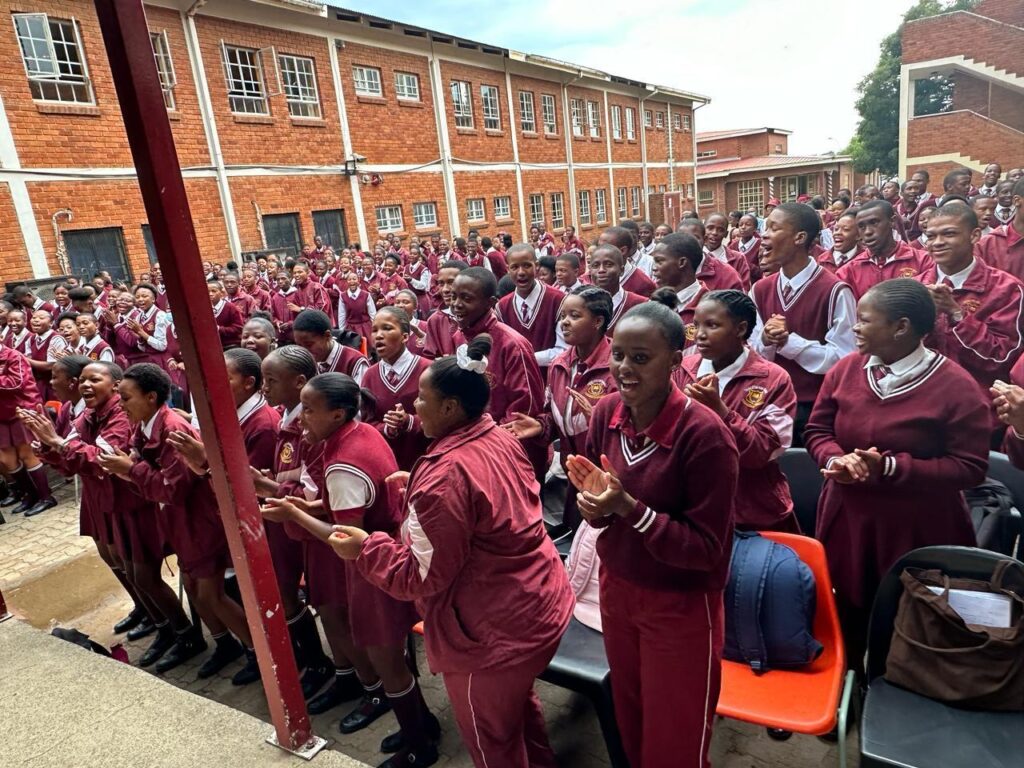
Four incidents. That is the number of school violence incidents that The Curriculum has reported on in just 6 weeks since the start of the 2024 academic year.
Siyanbonga Mngemezulu (16) from KwaZulu-Natal, lost his life after he was allegedly stabbed by a fellow school mate who is in Grade 8. Siyanda Malinga (14) also lost his life due to a stabbing incident between him and another learner outside the premises of his Oakdale Secondary School in Gauteng – due to alleged gangsterism. At Primrose Primary School in the East Rand, a 13-year-old male learner went with a gun to school and shot his principal. He had allegedly planned to shoot three of his teachers. In the Eastern Cape, six Grade 12 male learners were suspended following allegations of sexual assault on four Grade 8 female learners.
According to a quantitative study on discipline in South African Public Schools which was conducted by Professor JP Rossouw of North West University in 2003, the involvement of youth in the liberation struggle which ended in 1994, caused them to develop arrogance towards adults – both educators and parents. The study reveals that another reason for the decline in the level of discipline in recent years, might be the overemphasis on human rights, especially children’s rights which was actually a reaction to the increased child abuse or lack of a human-rights culture in the apartheid era.
Nontobeko Buthelezi, a teacher from a high school in Daveyton, East Rand, expressed her concerns regarding the safety of teachers in schools. She says while educators go the extra mile to create a safe space for learners, there is little to no consideration for the safety of educators.
“The generation of learners that we have now makes us more concerned about our own safety. Some of these learners do not have a firm foundation of discipline from home like we had back in our school days,” Buthelezi said.
Be that as it may, Maria Mabuza, a Gauteng East District official says schools work tirelessly, together with the South African Police Service (SAPS) to establish functional school safety committees.
“The Department of Basic Education (DBE) has policies, schools have regulations, classrooms have rules. All these rules and regulations ought to be adhered to by both teachers and learners, but unfortunately casualties will always be there,” she said.
Commenting on the topic, School Governing Body (SGB) Chairperson at Siphethu Primary School in Daveyton, Bafana Nkosi, says this is what makes structures like the SGB important in schools.
“As the SGB, our duties include enforcing discipline and safety measures. Since we are assigned as the bridge between teachers and the parents, we encourage parents to actively participate in addressing and promoting school safety,” Nkosi said.
An anonymous member of the Representative Council of Learners (RCL) at a school in the same area, says the Council plays a huge role when it comes to instilling discipline because of the age factor.
“We are all peers. We speak the same language. We relate to one another and therefore understand what often leads to certain behaviors. We are the most effective disciplinary committee, however in some instances, our peers intimidate us, and we are often afraid for our safety because they can be a part of gang groups,” they said.
In responding to the school safety challenges, the Gauteng Department of Education launched a programme called Kgutla Molao School Safety in July last year. It is aimed at curbing the spread of violence, gangsterism and bullying in schools. With this programme, the department works actively with law enforcement partners such as the SAPS, Metro Police, Community Policing Forums (CPF) and community patrollers.