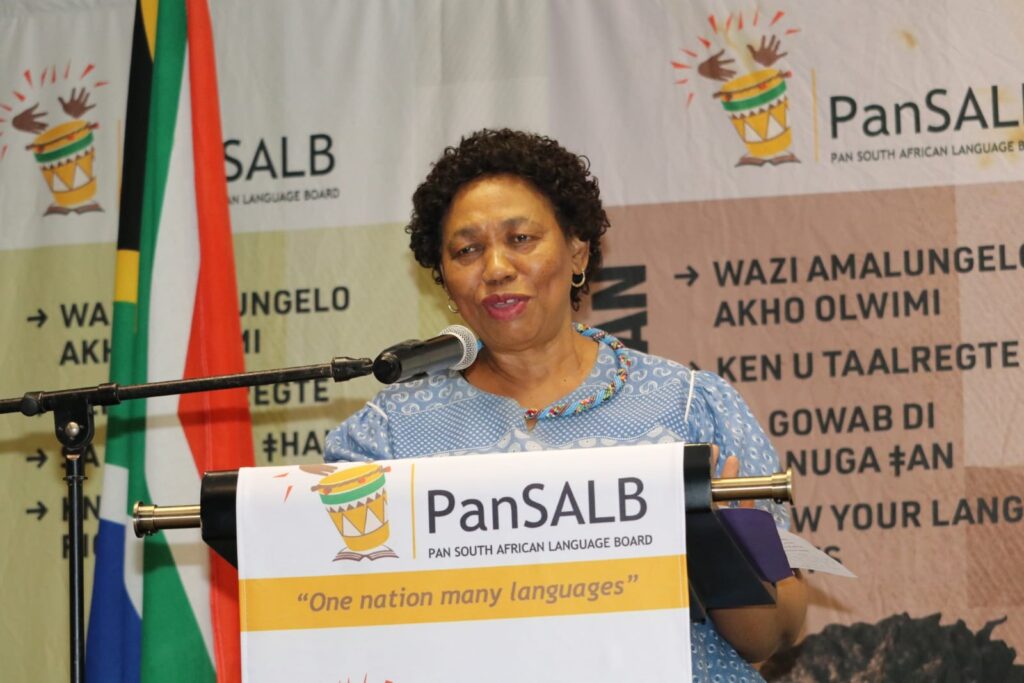
“If you talk to a man in a language he understands, that goes to his head. If you talk to him in his own language, that goes to his heart,” these are the wise words of the late icon Nelson Mandela that echoed in rooms across South Africa as International Mother Language Day 2024 was commemorated.
Language Practitioner and Linguist, Xolile Ntshangase believes that South Africa’s rainbow nation is blessed as it has a rich and diversified cultural legacy, including several ethnic groups and languages. She also believes that embracing diversity by teaching learners in their mother tongue, develops a sense of cultural identification, pride, and belonging among them, while teaching them to recognize the linguistic and cultural history of numerous communities around the country.
“Incorporating mother tongue into South Africa’s education sector is a strategic investment in cultural preservation, educational justice, and national growth, as well as a question of linguistic rights. It recognizes the country’s broad linguistic environment and encourages learners to excel in a language that reflects their cultural identity and heritage,” she said.
The history of International Mother Language Day (IMLD) dates back to the tragic yet catalysing event on which the Bengalis of the then Pakistani province, fought for the recognition of the Bengali language. In 1999, this act influenced UNESCO to declare 21 February as IMLD.
“In the same way that this day is engraved in the hearts and minds of the speakers of the Bengali language, because of the events of February 21st, 1952, we also hold a special place in our hearts for the young people, who were killed on 16 June 1976. Their sin was to reject the 50/50 language in education policy that African language learners were subjected to. We salute our young men and women, who knew that language issues were intertwined with identity, and saw it as a worthy cause to resist any effort that sought to place the majority in a maze of a hegemonic power struggle. We bow in reverence,” Basic Education Minister, Angie Motshekga, said in her keynote address at yesterday’s commemoration in East London, Eastern Cape province.
In support of Motshekga’s sentiments, Ntshangase emphasized that learning in one’s mother tongue promotes the development of strong language abilities such as vocabulary, grammar, and expressiveness. It improves cognitive skills including critical thinking, problem solving, and creativity. Learners who are fluent in their mother tongue are better prepared to understand complicated academic concepts and communicate successfully in a variety of settings.
The day’s theme: “Multilingualism, a pillar of intergenerational learning” by UNESCO, is also deemed relevant by Ntshangase.
“Research repeatedly shows that children learn best when they are taught in a language, they are fluent in a language they understand. Using mother tongue in education improves comprehension, engagement, and retention of academic knowledge. It provides a solid basis for studying new languages and disciplines, which leads to better overall academic success, she said.
The Chairperson of Public Services Commission of South Africa, Somadoda Fikeni, weighed in on the subject of embracing and sustaining our heritage as South Africans. He said that mother languages are our heritage because they form part of our DNA and are the software that makes us who we are.
This was also supported by Nthangase who states that learners in many parts of South Africa, particularly rural and marginalized communities, confront tremendous challenges to get decent education.
“Language obstacles can worsen existing inequities, impeding academic development and prolonging inequalities. Introducing mother tongue into education helps to close this gap by making learning more accessible and inclusive to all students, regardless of linguistic background,” she said.
Motshekga agrees that the intergenerational passing on of information and knowledge through the use of the mother tongue is a powerful thing
“We celebrate today on a stronger footing, where the government has a responsibility as espoused in our constitution, that all official languages must be developed for parity of esteem. The footprint we all leave here today, its fruits will be enjoyed by generations to come. This generation might not appreciate it for now, but as they stand on our shoulders when we are long gone, we hope that they will agree in the affirmative that indeed we made this possible for them. Mabafunde bonke abantwana (Let all children learn),” concluded Motshekga.